Want to be in the loop?
subscribe to
our notification
Business News
VIETNAM INDUSTRIES ENCOUNTER TPP BARRIERS
Nguyen Cong Ai, partner of auditing firm KPMG, told participants at a seminar titled "TPP and the Textile, Apparel and Footwear Sectors" held by the Vietnam Investment Review in HCM City on March 24 that Vietnam currently depends too much on imports of raw materials.
"It is estimated that 60-70 percent of inputs are imported, predominantly from China, the Republic of Korea and Chinese Taiwan," he said, pointing out that imports from China account for 48 percent of the textile industry's feedstock.
The industry can source only 2 percent of its cotton needs locally and 12.5 percent of fabrics, and the quality is inconsistent, he said.
Another challenge is the weakness in design, he said, explaining that Vietnamese textile and garment companies are mostly subcontractors for other firms in the region because they do not have the ability to design and develop their own brands.
"Only 2-3 percent of Vietnam's exports is of ODM (original design manufacturing)," he said, referring to products completely made by producers from the design to the finished stage.
The sector's productivity is low at a third of Hong Kong's and a fourth of China's, detracting from its competitiveness, he said, pointing out that Vietnamese garments are 15-30 percent more expensive than the global average.
Weak marketing and distribution worsen the problem, he said.
In the footwear sector, the local content is no more than 45 percent, while it has to import 80-100 percent of leather, chemicals for tanning, soles and buckles, and synthetic rubber from Chinese Taiwan, China, Thailand, and Brazil, he said.
The tanning industry can meet only 10 percent of the demand and operates at 25 percent capacity due to a shortage of materials, he said.
The industry shares the weaknesses of the textile and garment sector with respect to design, marketing and distribution, he said.
He suggested that link between companies in the value chain should be promoted through planning and developing industrial clusters specialising in textile and garment and footwear.
The two sectors should increase investment in producing feedstock, weaving and dyeing, he said.
Supporting industries, especially domestic companies in them, should be provided easy access to credit, he said.
They need to adopt modern technologies to improve design capacity thus add value to their products, he added.
Nguyen Mai, Chairman of the Vietnam Association of Foreign Invested Enterprises, agreed with Ai, saying the textile and garment and footwear associations should strengthen co-operation among their members and help set up specialised industrial parks.
He called on the Government to facilitate the parks and support businesses facing difficulties.
Deputy Minister of Planning and Investment Dang Huy Dong said TPP countries account for 40 percent of global GDP and 30 percent of trade, meaning the deal would bring plenty of opportunities as new supply chains are formed.
"Joining the TPP will give Vietnam the chance to upgrade its investment and business environment, attract foreign investment, speed up its restructuring process and shift its growth model.
"The country will also have more opportunities to spur economic growth and the associated benefits of the partnership will help raise Vietnam's competitiveness and, importantly, boost exports."
Vietnam has around 6,000 companies in the textile and garment industry that employ more than 2.5 million workers. Last year exports were worth 27 billion USD, or 16.6 percent of the country's total exports.
It was the world's sixth largest garment exporter behind China, the EU, Turkey, Bangladesh, and India.
Footwear exports topped 12 billion USD, up 16.3 percent from 2014.
Source: VNEP
Related News
BANKING / FINANCE / INSURANCE / TAX
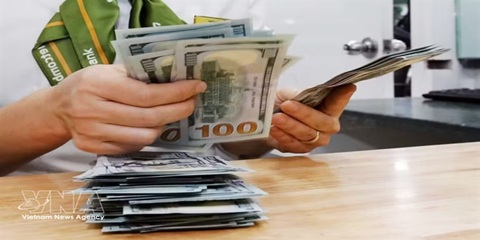
REMITTANCES TO HCM CITY RISE NEARLY 40% IN Q3
Remittances to HCM City reached more than US$2.83 billion in the third quarter of this year, up 39.5 per cent from the previous quarter and 3.6 per cent year-on-year. This was the first quarter showing positive annual growth this year, helping narrow the decline in remittance inflows over the first nine months. According to the State Bank of Vietnam (SBV)’s Regional Branch 2, remittances transferred to HCM City through credit institutions and economic organisations totalled $2.835 billion in Q3, an increase of more than $802 million from the previous quarter.
TECHNOLOGY
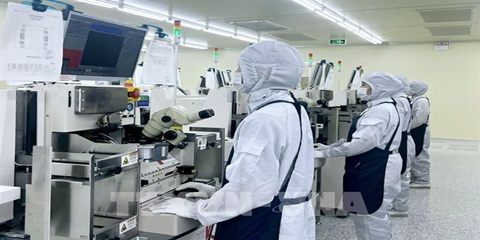
TECH SECTOR GROWTH OPENS UP OPPORTUNITIES FOR VIỆT NAM TO GO GLOBAL
The growth of the electronics, semiconductor and high-tech sectors worldwide is opening up a variety of opportunities for Vietnamese enterprises to integrate more deeply into the global supply chain. However, to become suppliers for these corporations, domestic enterprises must meet rigorous standards regarding quality, technology, productivity and order fulfilment capabilities.
VIETNAM ECONOMY INVESTMENT
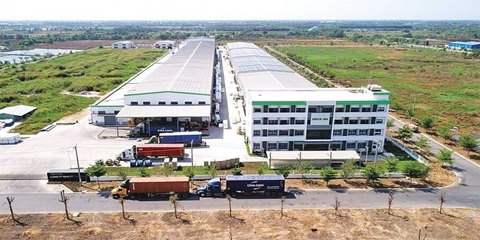
FOREIGN INVESTORS SEEKING A SYNCHRONISED MANUFACTURING ECOSYSTEM
Instead of focusing only on land costs and incentives as usual, foreign investors are seeking a synchronised manufacturing ecosystem, from stable power supply and logistics to shared infrastructure and the convenience of completing residence procedures for experts to serve their long-term investment in the country.

MEMBER CORNER / PROMOTIONS
SENTRYSAFE FHW40200 – PROTECT YOUR VALUABLES, ENJOY PEACE OF MIND!
Looking for a reliable solution to protect your important documents, cash, and valuables from fire and water damage? Genuine SENTRYSAFE - Reliable protection for your valuables and peace of mind! Contact Sen Wai Vietnam for more information and personalized product recommendations.
PROPERTY / INDUSTRIAL ZONE
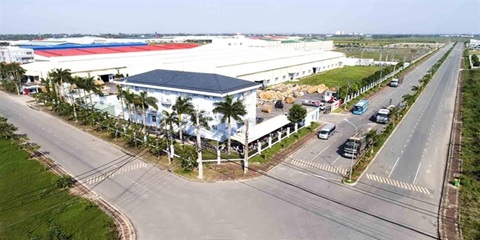
HCM CITY ATTRACTS US$5.7 BILLION INTO EXPORT PROCESSING AND INDUSTRIAL ZONES
HCM City attracted US$5.7 billion in domestic and foreign investment into its export processing and industrial zones during the first nine months of 2026. The figure exceeded the city's full-year target by 31 per cent, highlighting strong momentum in high-quality industrial investment under Resolution No.10-NQ/TW. Total investment reached 131 per cent of the 2026 target of $4.25 billion and represented a 29 per cent increase compared with the same period in 2025, according to the city's Export Processing and Industrial Zones Authority (HEPZA).
INFRASTRUCTURE / CONSTRUCTION / LOGISTIC / PORT
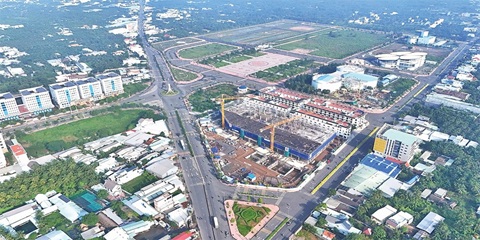
DONG THAP PROVINCE STEPS UP INDUSTRIAL EXPANSION AND INFRASTRUCTURE CONNECTIVITY
Accelerating public investment, strengthening inter-regional connectivity, and expanding industrial land are helping Dong Thap efficiently bolster competitiveness and drive economic growth. Following the 2025 merger of the former Dong Thap and Tien Giang provinces, the expanded Dong Thap province in the Mekong Delta faces mounting pressure to accelerate infrastructure development and strengthen connectivity among local economic zones, urban areas, industrial parks (IPs), and production centres.
Events Sponsors






















